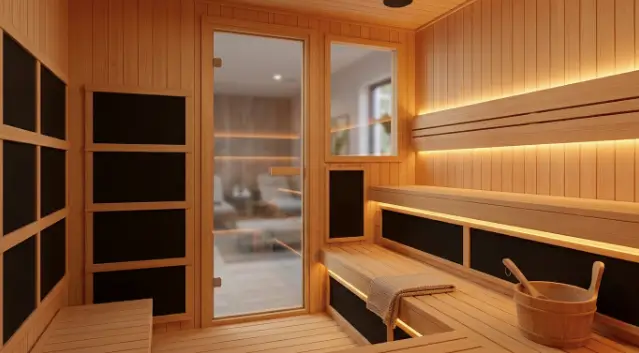
A first infrared sauna session should run around 10 to 15 minutes at roughly 120 degrees Fahrenheit, with water beforehand and after. From there, most beginners work up over a few weeks to 30 to 45 minute sessions at 130 to 150 degrees, which is the typical comfortable range for infrared panels. Getting the temperature, timing, and a few shared-use habits right early on makes the difference between a routine you stick with and one you abandon after a rough first try.
What Temperature Should You Actually Start At?
Infrared cabins run cooler than traditional saunas by design, typically 120 to 150 degrees compared to 170 to 195 for a traditional cabin, because the panels heat your body directly rather than heating the surrounding air. That said, 120 degrees still feels warm quickly if you’re new to it. Start there rather than at the top of the range, and give yourself a few sessions to gauge how your body responds before dialing the temperature up. Most regular users eventually settle somewhere in the 130 to 145 degree range for a comfortable, sustainable session, though personal tolerance varies more than people expect.
How Long Should Sessions Actually Last?
Keep your first session to 10 to 15 minutes, even if you feel like you could go longer. Infrared heat builds gradually since it’s warming your body directly rather than immediately surrounding you with hot air, so it’s easy to underestimate how much your core temperature has actually risen until you step out and feel it. Once you have a few sessions behind you and know how you respond, 30 to 45 minutes is the typical range regular users settle into. There’s no strict rule that longer is better. Session length should match how you actually feel, not a number you saw as a target.
Hydration: Before, During, and After
Drink a full glass of water in the 30 minutes before you get in, and keep water within reach if your session runs past 20 minutes. Infrared sessions produce real sweating even at their lower cabin temperatures, and it’s easy to underestimate fluid loss precisely because the air doesn’t feel as punishing as a traditional cabin’s higher heat. After your session, continue rehydrating over the following hour rather than assuming one glass covers it. If you’re prone to lightheadedness in heat generally, it’s worth sitting for a minute before standing up at the end of a session, since blood pressure can dip briefly as your body cools.
How Should You Cool Down Afterward?
Give yourself a few minutes to cool down gradually rather than stepping straight from the cabin into a cold shower or air conditioning. A brief transition, sitting outside the cabin or in a mild-temperature room for a couple of minutes, lets your heart rate and skin temperature come down at a more comfortable pace. Once you’ve cooled slightly, a shower is a fine way to rinse off sweat, and there’s no requirement to use cold water specifically unless you’re deliberately pairing the session with a cold plunge for contrast. Some people prefer to simply towel off, relax for a few minutes, and let their body temperature normalize on its own before doing anything else that evening.
What Should You Wear or Bring?
Light, breathable clothing works best, a swimsuit, gym shorts, or a loose t-shirt, since infrared heat penetrates skin directly and heavy or synthetic fabric can trap uncomfortable heat against your body rather than letting it dissipate. Some people prefer sitting directly on a towel with minimal clothing, which is fine too and comes down to personal comfort. Bring a second towel to wipe down sweat during longer sessions, and keep a water bottle within reach rather than getting up mid-session to refill one.
Shared-Household Etiquette Worth Knowing
If more than one person in your household uses the sauna, a few habits keep it pleasant for everyone. Wipe down the bench and floor after each session, since sweat left on wood surfaces is what eventually causes odor and staining over time. Leave the door cracked for 10 to 15 minutes after you finish so the interior can air out and dry rather than staying warm and humid until the next person uses it. If people have different temperature preferences, which is common, agree on a default setting or a quick reset routine so nobody’s stuck adjusting a stranger’s settings every time they sit down. None of this takes more than a minute or two, but skipping it consistently is how a shared sauna starts to feel like a chore instead of a routine people look forward to.
How Often Can You Actually Use It?
Most healthy adults can use an infrared sauna anywhere from 3 to 7 times a week without issue, and cohort research on sauna bathing generally has found more frequent use associated with better cardiovascular outcomes, though that evidence is built mainly on traditional sauna bathing rather than infrared specifically. If you’re just starting out, 2 to 3 sessions a week is a reasonable pace to build comfort and a habit before increasing frequency. Listen to how your body responds rather than chasing a specific number, and skip a session if you’re dehydrated, feeling unwell, or simply not up for it that day. Once you’ve settled into a comfortable routine, it’s worth browsing a few current cabin options to see what fits your space and household size, whether you’re upgrading from a single-person unit or buying your first one, and the SweatDecks infrared saunas collection is one place to compare sizes and panel types side by side.
Frequently Asked Questions
What temperature should a beginner set an infrared sauna to?
Start around 120 degrees Fahrenheit and work up toward the typical 130 to 150 degree range over a few sessions.
How long should a first infrared sauna session last?
Keep it to 10 to 15 minutes. Regular users typically settle into 30 to 45 minute sessions once they know how they respond.
Should you drink water before or after an infrared sauna session?
Both. Drink a full glass beforehand and continue rehydrating afterward, since sessions cause real sweating even at lower temperatures.
What should you wear inside an infrared sauna?
Light, breathable clothing like a swimsuit or gym shorts, or sit on a towel with minimal clothing. Avoid heat-trapping synthetic fabrics.
How often can you safely use an infrared sauna each week?
Most healthy adults can use one 3 to 7 times a week, though starting with 2 to 3 sessions and increasing gradually is reasonable.
References
- “Cardiovascular and Other Health Benefits of Sauna Bathing: A Review of the Evidence.” Mayo Clinic Proceedings, 2018. https://pubmed.ncbi.nlm.nih.gov/30077204/
- “Effects of heat and cold on health, with special reference to Finnish sauna bathing.” American Journal of Physiology, 2018. https://pubmed.ncbi.nlm.nih.gov/29351426/
- “Clinical Effects of Regular Dry Sauna Bathing: A Systematic Review.” Evidence-Based Complementary and Alternative Medicine, 2018. https://pubmed.ncbi.nlm.nih.gov/29849692/
By Owen Bramwell